
Lincoln County Court Calendars Explained
Lincoln County court calendars are not gathered into one public, name-searchable database. The official county and Tennessee court sources list the courts, clerks, local rules, and office contacts. None of them offers a countywide date form. That makes the responsible clerk the true starting point for most trial settings.
Circuit, Criminal, General Sessions, and Juvenile matters route to the Lincoln County Circuit Court Clerk. Chancery and Probate settings route to the Clerk & Master. A municipal citation or ordinance case stays with its city-court clerk.
One caution belongs here. A calendar entry tells you when a matter is expected to be called, nothing more. It does not prove a hearing occurred. It does not show what the judge decided. It does not confirm that the case remains open. For an outcome, request the later docket entry, order, judgment, or disposition from the correct office. The gap matters when a session was reset, a matter settled, or the file's access is limited.
Lincoln County Calendar Search Limits
Lincoln County offers no official public trial-calendar search. You cannot look up by party, case number, judge, or date range. Tennessee Public Case History does display appellate events. Those are milestones in the Supreme Court, Court of Appeals, or Court of Criminal Appeals. They are not upcoming Lincoln County trial settings. Electronic filing under Tennessee rules likewise creates no public calendar viewer.
Quick answer: If no date appears online, contact the clerk for the named court. Give the case number, party name, case type, and approximate date, then ask for the latest setting and room.
A missing public result proves nothing about a setting. The file may be local only. It may sit under a different name, be newly entered, be confidential, or have moved by a later order.
Finding Your Court Date
Work the available routes in a deliberate order. Start with the court named on the summons, citation, notice, or prior order. County trial settings get confirmed locally. A city matter stays with the city unless it has moved to county court.
- Read the notice for the court name and any case or citation number.
- For Circuit, Criminal, General Sessions, or Juvenile, call Lisa Simmons's Circuit Court Clerk office at (931) 433-2334 or visit Room 203, 112 Main Avenue South, Fayetteville.
- For Chancery or Probate, call Rebecca N. Bartlett Carpenter's Clerk & Master office at (931) 433-1482 or visit Room B-109 at the same courthouse.
- For a municipal matter, contact the Fayetteville, Ardmore, or Petersburg city-court clerk. Ardmore also publishes public event notices online.
- If an appeal is known, use Tennessee Public Case History for appellate milestones, then return to the local clerk for the trial setting.
- Ask whether a printed or posted daily calendar is available at the clerk counter and confirm the current courtroom before travel.
A mailed or emailed inquiry can help when travel is hard. Lincoln County posts no official calendar-request form. Give a bounded date range and ask the office which written channel it accepts.
Lincoln County Chancery Calendar Control
The 17th Judicial District local rules give Lincoln County Chancery Court its strongest formal calendar framework. They describe a docket call at the opening of a session. They split contested from uncontested matters. A contested case has a disputed issue still alive. It is scheduled through the Chancellor's calendar. An uncontested case follows a separate path through the Clerk & Master. It remains subject to the court's rules and approval.
Official versions of the rules do not use identical session wording. One refers to the second Monday of March and September. Another refers to the second Monday of September and regular Tuesdays within session. The rules also acknowledge other factors. Holidays, conferences, and changes can affect dates. The lesson is not a fixed recurring date. It is that the Clerk & Master's posted calendar controls the actual Lincoln County Chancery setting.
Note: Treat the local rule as a framework and verify the current posted Chancery calendar before relying on a recurring date.
How to Read a Court Setting
A date alone is not a complete Lincoln County court setting. Read each field as its own fact. Confirm any blank with the clerk. The setting type tells you whether the event is a docket call, motion, trial, probate appearance, or another proceeding.
| Date and time | The scheduled call time, subject to a later reset or court instruction. |
|---|---|
| Court | Circuit, Criminal, General Sessions, Juvenile, Chancery, Probate, or the named city court. |
| Room and place | The courthouse room or city chamber where the matter is expected to be called. |
| Case number | The clerk's identifier used to distinguish the matter and find the latest entry. |
| Setting type | Docket call, motion, contested hearing, uncontested matter, trial, probate appearance, or municipal session. |
| Judge | The assigned judicial officer, which should be confirmed when not shown on the notice. |
A setting is procedural, not an outcome. If the result matters, request the signed order or docket entry after the event.
Ardmore Court Calendar Evidence
The official Ardmore city-court series shows what a public municipal announcement can offer. Ardmore does publish city-court events there. The listing is not a party-name index, though, and it does not reveal a complete docket.
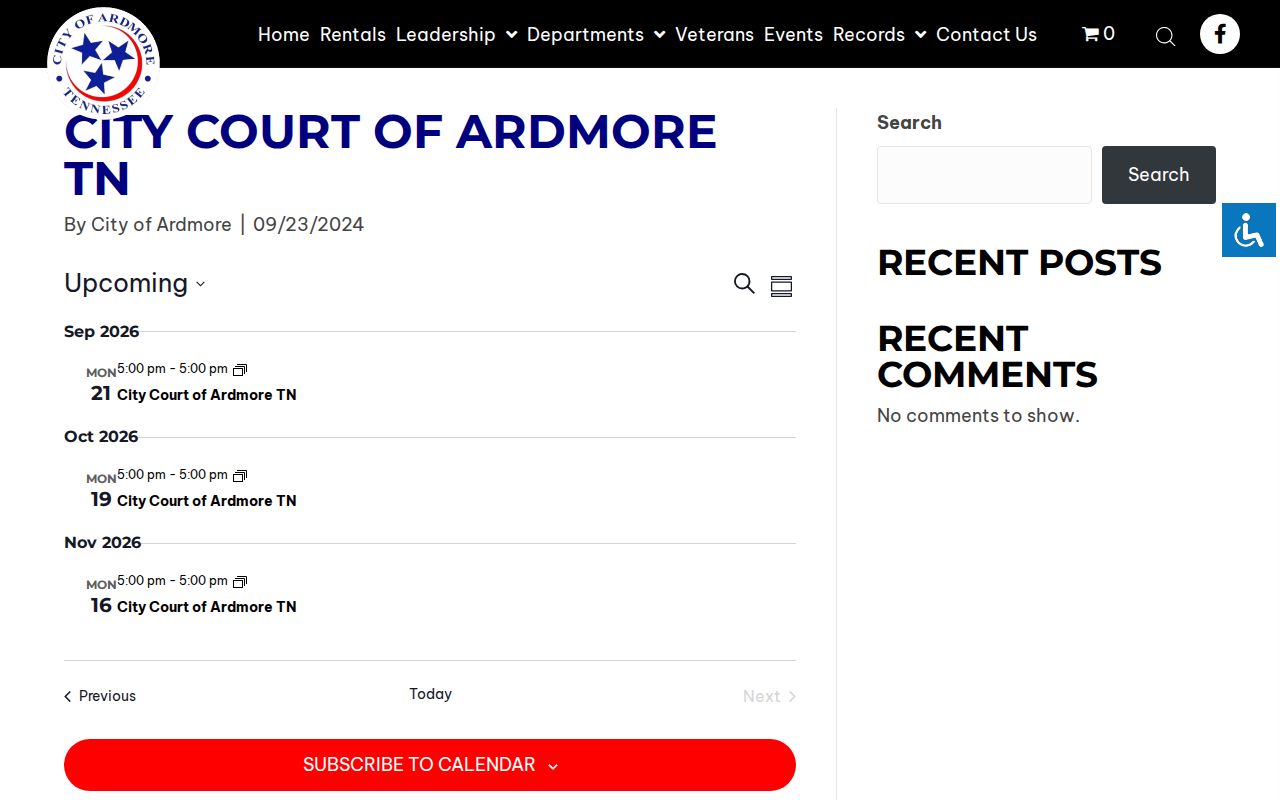
That series helps you find a scheduled municipal session. For a citation-specific setting or disposition, the city clerk remains the source.
An official Ardmore event entry shows the pattern. One notice supplies a date, time, chamber, arrival instruction, and location, yet it lists no parties and no case numbers.
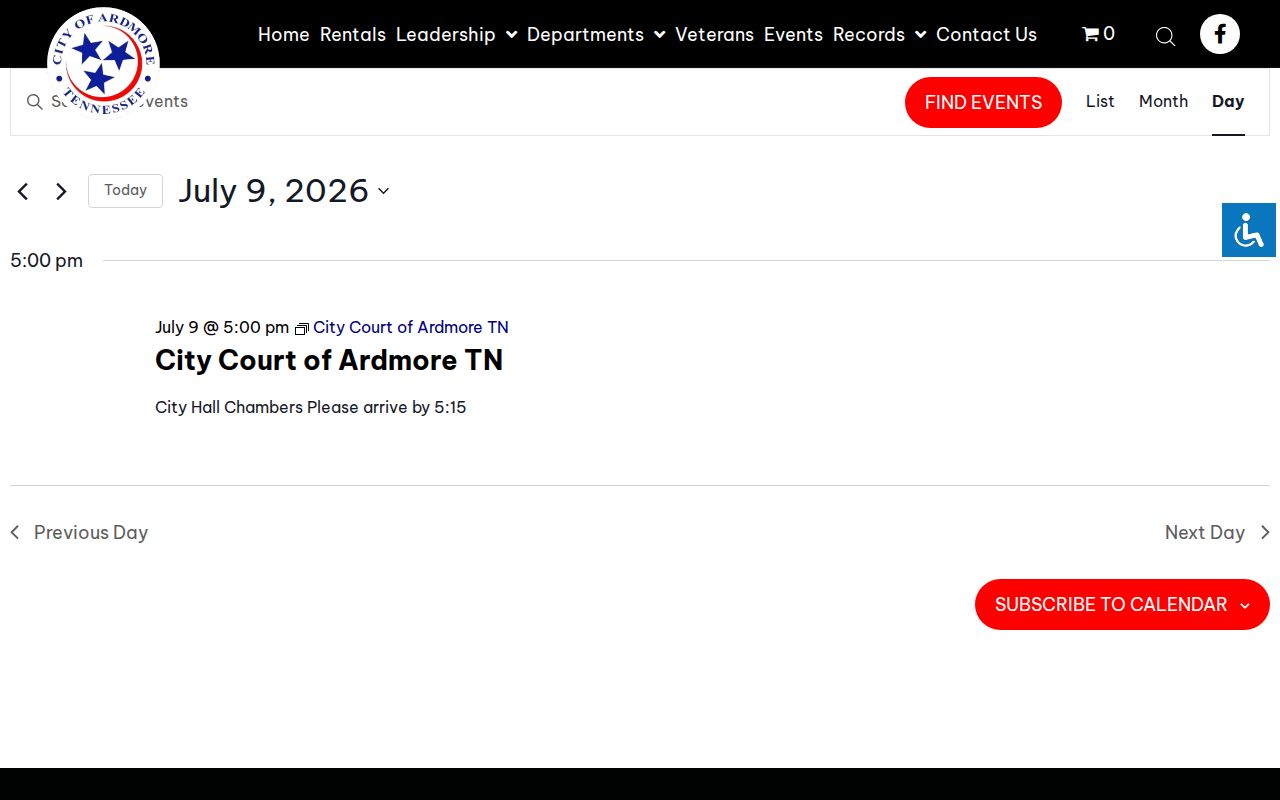
That narrow field set is the point. Use the event to confirm a session, not to infer who is on the docket or what happened.
Continuances, Resets, and Cancellations
Sometimes a hearing does not happen on the day first set. A continuance pushes it to a later date. A reset gives the case a new setting after the old one is changed or vacated. Lincoln County posts no live feed of these changes. An older notice or a saved calendar page can therefore be stale. Call the clerk who controls the case. Ask for the newest entry or order, along with the next scheduled date. That one call should confirm the court, the date, the time, the room, and the type of event. If a lawyer or a party tells you the matter moved, ask one thing. Was a written order entered? The phone helps you plan the trip. But the docket entry or order is the record that legally matters. And if an event simply vanishes from the calendar, do not assume the case was dismissed. It may have settled, transferred to another court, been sealed, or moved to a different date.
Lincoln County Setting Terms
Setting terms on the Lincoln County docket are terse by design, since they steer a heavy court calendar through one long day. A setting is only a scheduled event, so treat these labels as markers of what happens next rather than as the final result of a case.
- Docket call
- The opening call or listing of matters during a Chancery session.
- Contested matter
- A matter with an issue that still requires judicial resolution.
- Uncontested matter
- A matter presented without the same live dispute, still subject to court approval.
- Session
- A scheduled court sitting, not a promise that every case type will be heard.
- Continuance
- A postponement of a hearing or trial.
- Reset
- A replacement date assigned after a prior setting changes.
When you call the clerk about a court date, repeat the exact term printed on the docket. That precise wording helps the clerk's office pull up the right entry on the Lincoln County court calendar without guessing.
Ardmore Time Conflict
Ardmore's own published material gives two different times for the same court session. The July 9, 2026 event page posts a 5:00 p.m. start. It asks attendees to be there by 5:15. The city's records page gives a different time. It states that City Court convenes at 5:30 p.m. on the second Thursday of each month. Two Thursdays shift to the third: January and July. The Ardmore records and calendar page is the official source. It carries the recurring schedule rule.
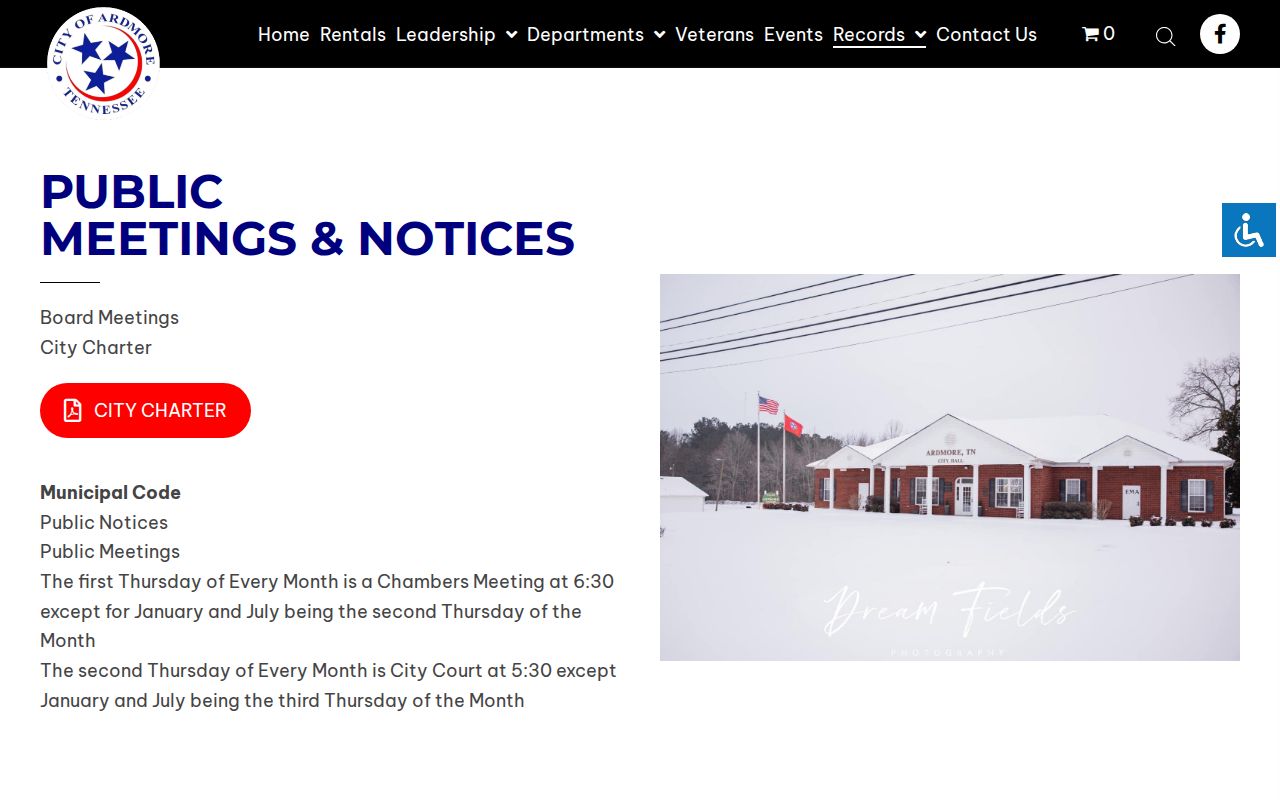
Do not split the difference or assume one time is a typo. Call Ardmore City Court at (931) 427-2124 and verify the date, the arrival time, and the location listed on your current citation or notice.
If You Miss a Court Setting
Act fast if you miss a Lincoln County court setting. One skipped date can trigger a new order. Other consequences can follow, though much depends on the court and the type of case. An old calendar will not tell you where things stand now. Call the clerk for your case. Hand over the case number, and ask what the docket shows today.
Missed setting: Call the responsible clerk or your attorney at once. Ask whether a new date, order, or failure-to-appear entry has been issued.
For legal advice about how to respond, consult a Tennessee-licensed attorney before appearing or filing anything.
The Tennessee AOC annual-report page gives broader court-system context, not a personal schedule.
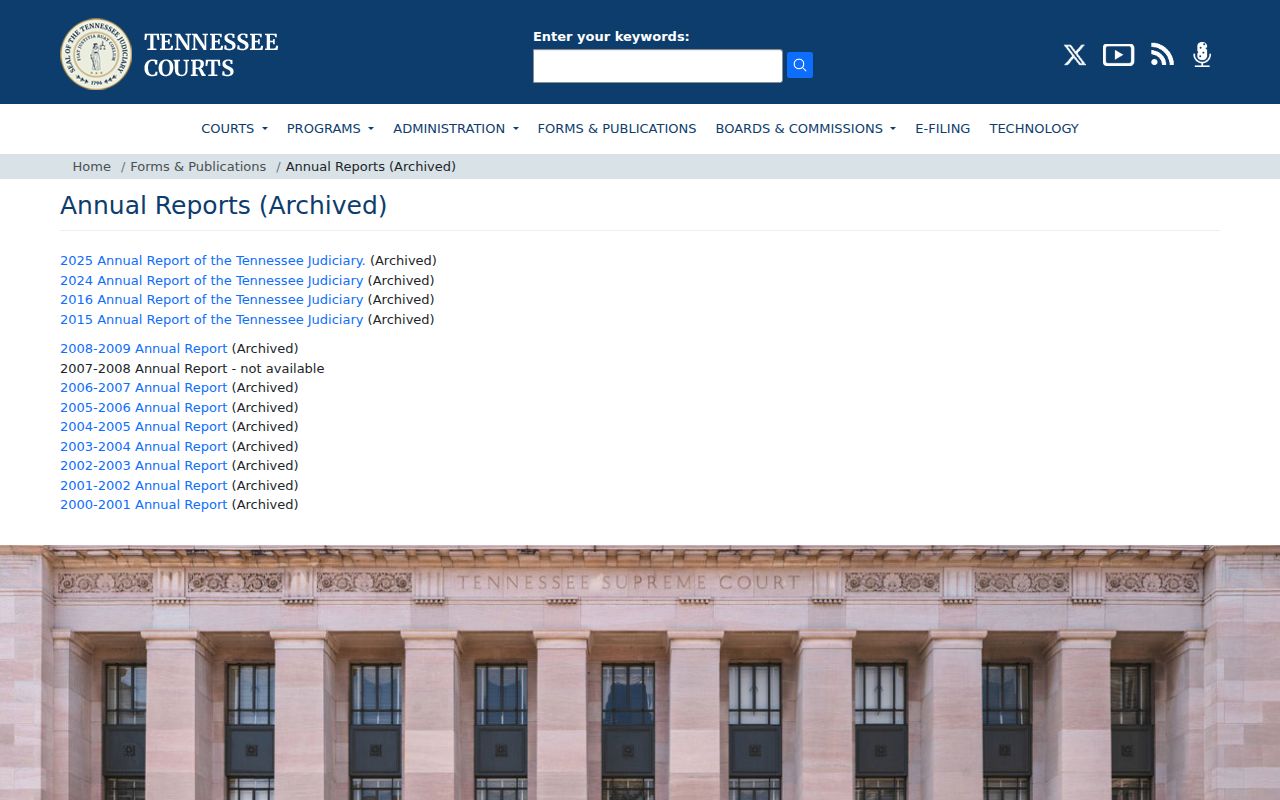
Background material can help you understand how the official Lincoln County system works. Still, only the current docket and a clerk's confirmation govern what happens at your own setting.