
Searching Lincoln County Criminal Dockets
No official source reviewed for Lincoln County exposed a searchable public trial docket. The dependable route is the Lincoln County Circuit Court Clerk, whose office retains and files criminal papers and serves Circuit, General Sessions, and Juvenile Court. Give the clerk the court named on the warrant, citation, indictment, judgment, or prior notice. A local number is best. If it is missing, supply the exact known name, charge wording, and a bounded filing or hearing period.
The clerk can locate a trial index, docket sheet, order, or judgment. Tennessee Public Case History searches appeals only. CourtFeePay accepts payments on identified matters but does not return a full criminal case history. Counter and telephone service remain key. Written requests may be sent by mail, and Tennessee guidance also recognizes oral, phone, fax, mail, and email inspection requests, subject to the custodian's process.
- Identify General Sessions, Circuit or Criminal, Juvenile, or municipal court from the source paper.
- Contact the Circuit Court Clerk with the local number, exact name, charge, and date range.
- Ask for a docket sheet, specified order, final judgment, or sentencing order.
- Search Public Case History only when an appeal is known or suspected.
- Confirm the result and copy options with the official custodian.
Lincoln Criminal Clerk Route
Lisa Simmons, Lincoln County Circuit Court Clerk, is the first stop for Circuit, Criminal, General Sessions, and Juvenile clerical records. The office is at 112 Main Avenue South, Room 203, Fayetteville, Tennessee 37334, and the telephone number is (931) 433-2334. The room matters because other county offices share the address. The County Clerk in Room 102 handles vehicle registration, marriage licenses, and other county work, not the ordinary criminal docket.
Lincoln County Circuit Court Clerk
112 Main Avenue South, Room 203
Fayetteville, TN 37334
(931) 433-2334
Circuit, Criminal, General Sessions, and Juvenile files and indexes.
A city ordinance charge may instead remain with the city-court clerk. Read the issuing court before calling. Ardmore also spans county lines, so verify the county as well as the city. This small check can prevent a false no-record response.
Inside a Lincoln County Criminal Docket
A Lincoln County criminal docket is an event record. It can identify the court and number, charge language, filing and hearing dates, motions, pleas, rulings, disposition, sentence, and appeal activity. An inspected appellate detail showed a Lincoln trial number in a year, “CR,” and number format, such as 17 CR 138. That sample proves the field can bridge an appeal back to the trial file. It does not establish one required format for every local court or year.
| Case Number | Local trial number, plus an appellate number if review was sought. |
|---|---|
| Charge | The precise offense description shown in the source record. |
| Settings | Preliminary hearing, arraignment, pretrial, trial, sentencing, or reset dates. |
| Events | Warrant, indictment, motion, plea, judgment, appeal, or filed order. |
| Disposition | Exact result and date, which may apply to one count rather than the whole case. |
Ask for the event date and exact clerk wording. “Pending” means no final result appeared in the layer searched. It does not prove current custody or warrant status. An appeal filing shows that review was requested, not that a judgment was reversed.
Lincoln Criminal Appeal Bridge
The official Public Case History detail used in the research shows how an appellate record connects to a Lincoln County criminal docket. It displayed the originating trial court, judge, local number, party and counsel roles, filing milestones, disposition, case history, and record-volume fields.
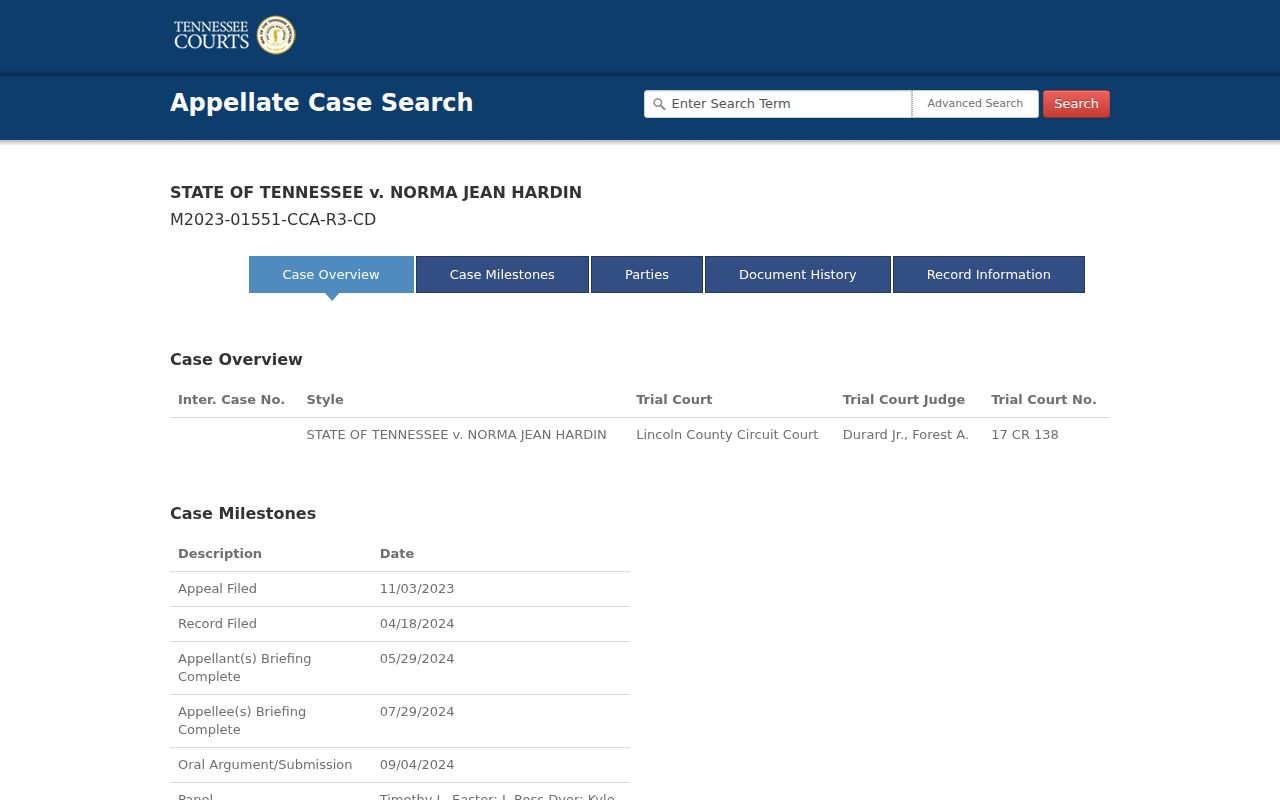
The trial number shown there is the useful bridge. Take it back to the Circuit Court Clerk for the full local docket or trial document. Public Case History covers the Tennessee Supreme Court, Court of Appeals, and Court of Criminal Appeals, not routine Lincoln trial cases. Its data is current through the prior business day, and its coverage limits mean a blank result cannot prove that no local case exists.
How a Criminal Case Moves
A General Sessions matter may begin with a warrant, citation, or preliminary setting. A felony can be bound over for action in Circuit or Criminal Court, where an indictment, arraignment, pretrial motions, plea, trial, judgment, and sentence may create separate entries. Misdemeanor matters authorized for General Sessions can remain there. The exact path depends on the charge and court, so not every Lincoln County criminal docket contains every stage.
Lincoln docket flow: Charge Filed › Preliminary Hearing or Arraignment › Pretrial Settings › Plea or Trial › Disposition › Sentencing
Each setting is one event. A continuance moves a setting; it does not dismiss the charge. A plea may precede sentencing. A notice of appeal starts another record layer. Read the dated sequence, then obtain the final order when the outcome matters.
Lincoln Payment Is Not Docket
CourtFeePay's official landing page provides a route for paying an identified court obligation. The source image below shows the payment service, not a public case-search system.
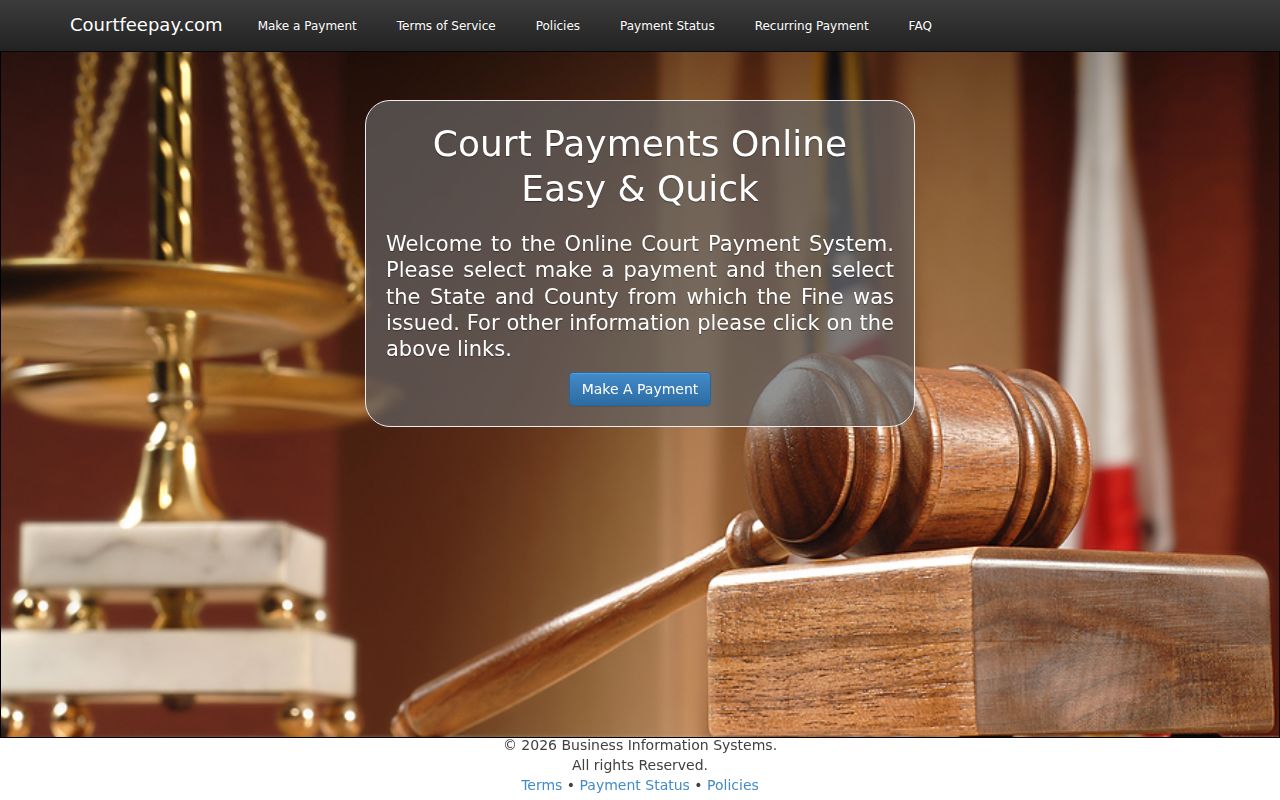
A payment receipt answers whether a transaction was submitted. It does not show every charge, hearing, motion, judgment, or appeal in a Lincoln County criminal docket.
The service also presents a Lincoln County General Sessions selection, pictured below.
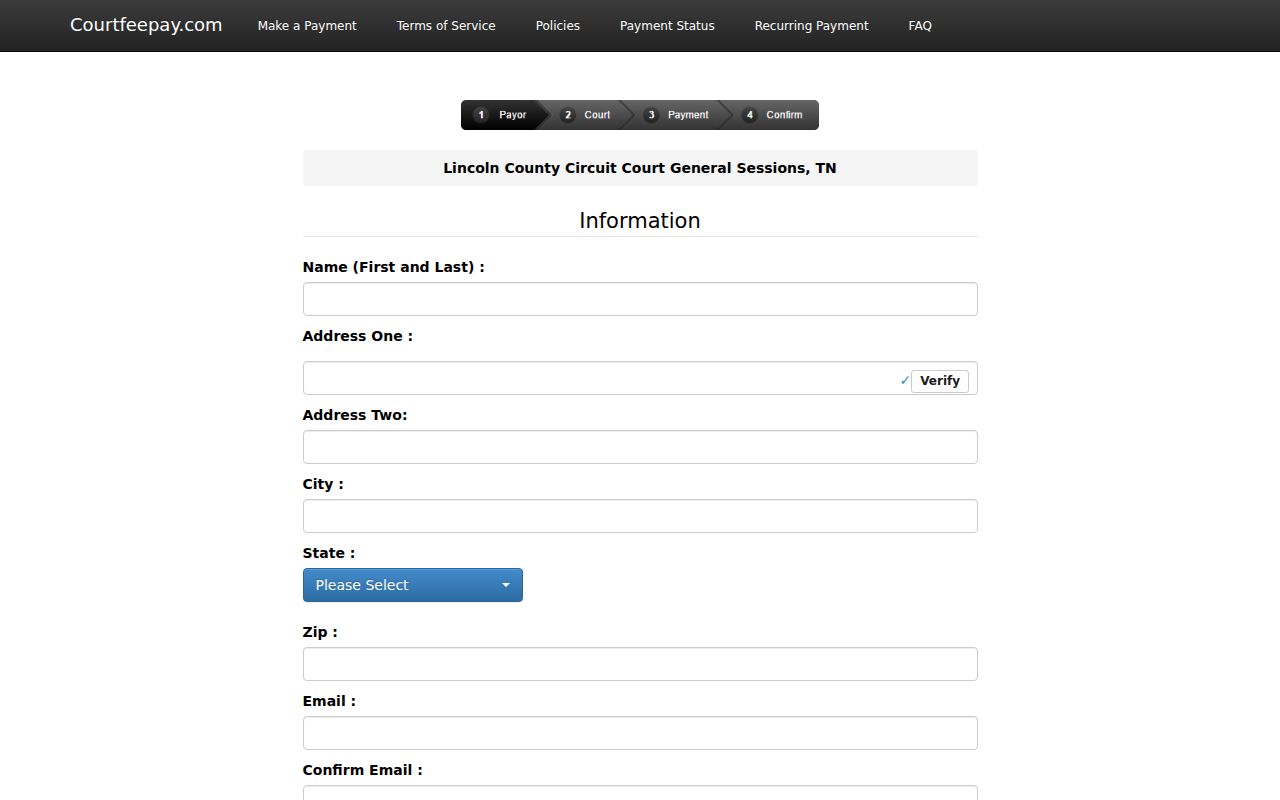
Use this channel only after the court and obligation are known. The portal displays a separate service-fee acknowledgment, so inspect the amount before accepting. Questions about the docket, a hearing, or the judgment still go to the clerk.
Courts That Hold Criminal Dockets
General Sessions Court may conduct preliminary felony hearings and hear authorized misdemeanors. Circuit or Criminal Court is the higher trial forum for indictments and felony trials. Juvenile Court records route through the Circuit Court Clerk but are confidential. Municipal courts handle limited city matters authorized by law.
| Lincoln court | Criminal role | First contact |
|---|---|---|
| General Sessions | Preliminary felony matters and authorized misdemeanors | Circuit Court Clerk |
| Circuit / Criminal | Indictments, felony trials, judgments, and sentencing | Circuit Court Clerk |
| Juvenile | Restricted juvenile proceedings | Circuit Court Clerk, subject to access rules |
| Municipal / City | Limited city ordinance matters | Named city-court clerk |
The source document controls the route. If it names a city court, call that clerk. If it identifies Lincoln General Sessions or Circuit, begin in Room 203. An appellate number sends the search to Public Case History first, but the local file remains with the local custodian.
Lincoln Criminal Counts in Context
The official AOC statistical report recorded 1,165 Lincoln criminal counts filed and 819 disposed from July 1, 2023 through June 30, 2024. Drugs accounted for 366 filed counts, burglary and theft for 187, property offenses for 143, and probation violations for 114. These are reporting units, not a list of people or cases.
A case may have several counts. One count may be dismissed while another ends by plea. The report cannot reveal whether a specific Lincoln County criminal docket is open, closed, sealed, or appealed. Consult the dated case entries.
Note: Statistical counts should never replace the clerk's current docket or the court's signed judgment.
Lincoln Criminal Status Terms
No official Lincoln code table was found, so preserve the clerk's exact words. Common terms can guide reading, but only the actual entry establishes what happened to each count.
- Nolle prosequi
- The prosecution abandoned the stated charge at that point.
- Bound over
- The matter moved onward after a preliminary stage.
- Continued
- A setting moved to another date; the case was not dismissed.
- Diversion
- A distinct disposition path that must be read with its order and terms.
- Remanded
- An appellate court sent the matter back for further action.
“Dismissed” may apply to one count and not another. “Guilty plea” should be read with the offense and judgment. “Acquittal” is not the same entry as dismissal. Exact dates and documents keep those distinctions clear.
Sealed Dockets and Public Access
Tennessee Supreme Court Rule 34 starts with public access to court records but recognizes exceptions created by law, rule, and court order. Public access does not make sealed, expunged, protected, or internal judicial material available. It also does not require every public field or attachment to appear online.
Juvenile material needs special care. The county page identifies those files as confidential, and Juvenile Rule 114 supplies the official framework. Ask whether access is allowed rather than requesting protected contents.
Access check: An old docket or appellate event cannot confirm a current warrant, custody status, or final result. Verify those facts with the responsible official custodian.